
Image and Signal Processing
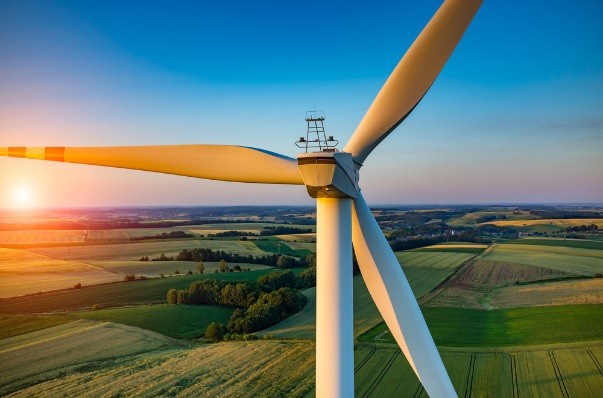
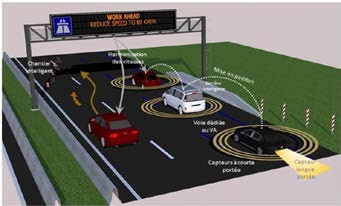

Image and Signal Processing
New Tools for the Analysis of Large-Scale Geolocated Data
(i.e., Bayesian inference, particle filtering) to Ensure the Reliability of New Mobility Systems (SHM for Vehicles and Infrastructure)
Improving the Efficiency and Resilience of Infrastructures
Transporting Efficiently and Moving Safely
This research theme focuses on studying and developing new approaches (model-based or data-driven) for processing large-scale data collected from various types of objects (structures, vehicles, etc.). It encompasses activities conducted within our joint research team I4S in collaboration with Inria.
Key research objectives include:
- Developing statistical algorithms robust to noise and environmental variations and assessing the impact of uncertainties.
- Studying and developing new approaches that combine physical models with statistical methods.
- Studying and developing new methods for monitoring transient systems under highly variable operational conditions.
- Algorithmic optimization and robustness for HPC deployment (e.g., GPGPU).
- Instrumentation systems required for Autonomous Vehicle guidance: trajectory metrology, measurement synchronization, redundancy in geolocation (satellite-based) and vision systems.
- Lane-level localization and map-matching in enriched maps.
Five main challenges will be addressed:
- Damage localization.
- Monitoring and mitigation of thermal effects.
- Remote SHM of large structures, including offshore wind turbines (full-field and contactless sensors).
- Real-time, decimeter-level vehicle localization.
- Incorporating metrological considerations into data processing algorithms.
I4S (Inférence Statistique pour la Surveillance et la Sécurité des Structures) is a joint research team between Inria and IFSTTAR.
The overarching goal of this project team is the development of Structural Health Monitoring (SHM) techniques through a tight integration of statistical methods and physical modeling. The aim is to create robust, efficient, and autonomous SHM solutions for civil, electrical, mechanical, and aerospace structures.
Effective monitoring solutions require system identification and damage diagnosis tools that are robust to environmental variations. They must also be capable of handling both complex physical models and a diverse array of sensor instrumentation.
This involves new statistical and numerical techniques, as well as improvements to the underlying physical models. The combined statistical analysis of measurement data with physical modeling, common to all research activities, leads to stronger methodologies and technological advancements.